
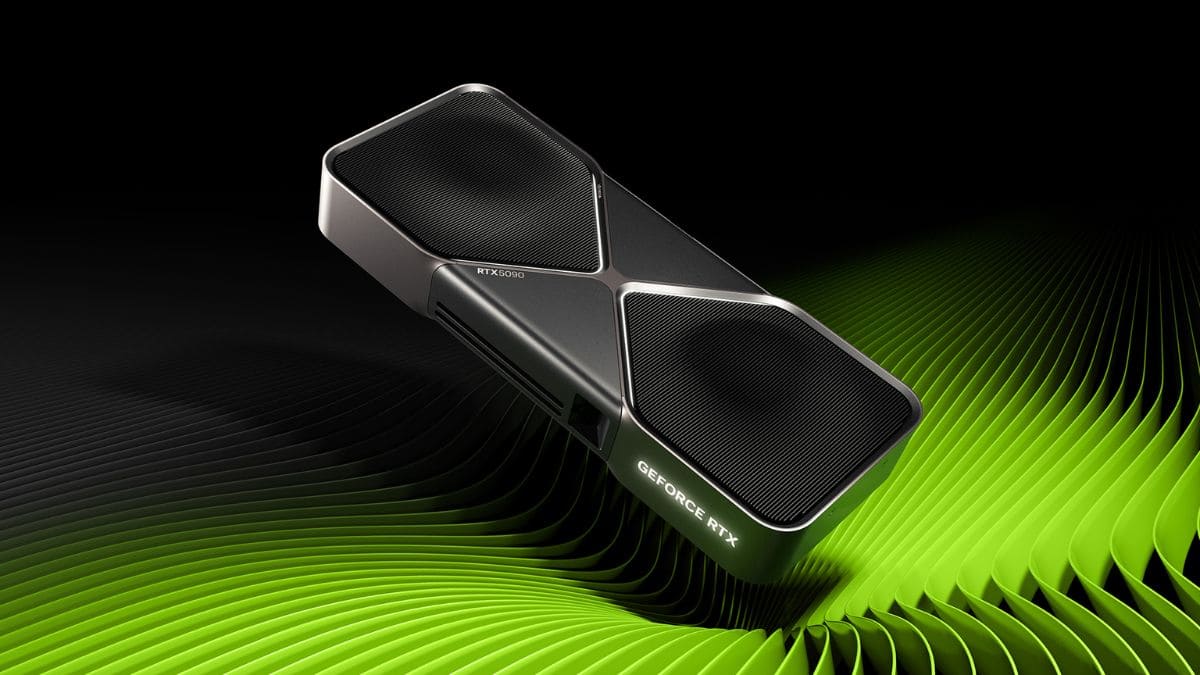

If you’ve been trying to get your hands on one of the new RTX 50-series graphics cards (or honestly, any half-decent GPU) and have been met with nothing but “Out of Stock” messages and eye-watering prices, we have some bad news. It’s going to be a long year.
In a recent earnings call that has sent ripples of dread through the gaming community, NVIDIA officially confirmed that the NVIDIA GPU shortage is far from over. In fact, CEO Jensen Huang warned that supply will remain “very tight” through the first half of the year, and the company lacks clear visibility on when things will improve.
Let’s break down exactly what is happening, why your dream PC build is on hold, and how this mess might even impact the launch of the Nintendo Switch 2.
The AI Elephant in the Room
We have to talk about the pink elephant in the server room: Artificial Intelligence.
NVIDIA is essentially printing money right now, but it’s not coming from gamers. Their data center business (those AI chips powering the likes of ChatGPT) raked in a staggering $623 billion in recent quarters, compared to just $37 billion from gaming. When you are fighting over the same limited factory space at TSMC, you go where the profit margin is.
Reports suggest that NVIDIA has cut production of its consumer RTX 50-series “Blackwell” GPUs by as much as 15-20% through at least the third quarter of 2026 to re-allocate wafer starts to AI chips. Essentially, the factory lines that should be making your RTX 5090 are busy making AI accelerators that sell for tens of thousands of dollars a piece.
The Memory Catch-22
It isn’t just about the GPU chips themselves. We are also in the middle of a major memory crunch.
- GDDR7 vs. HBM3E: New gaming cards need GDDR7 memory. However, memory manufacturers like SK Hynix and Samsung are making far more money producing HBM3E (High Bandwidth Memory) for AI data centers. They are prioritizing that over the GDDR7 that goes into gaming cards.
- Wider Impacts: This shortage is so bad that even Valve has acknowledged it, warning that Steam Deck availability will be “intermittent” due to the memory and storage shortages driven by AI demand.
The Desktop Reality: What Can You Actually Buy?
If you are planning a new PC build, temper your expectations. The supply chain is currently a wasteland for high-end and even mid-range options.
- Flagship Famine (RTX 5090/5080): If you thought the RTX 5090 was expensive before, it is now essentially a unicorn. Prices on the secondary market in places like Korea have reportedly soared past the $3,400 mark. Even if you have the budget, finding one at a retailer is a matter of luck.
- The Vanishing Mid-Range (5070 Ti / 5060 Ti): The cards that most gamers actually buy are getting crushed. Rumors that were initially dismissed now seem prescient, indicating that the RTX 5070 Ti and 5060 Ti supply will be drastically reduced. Some sources suggest the RTX 5060 might be effectively “off the market” for at least six months.
- The Retro Revival (RTX 3060): In a move that feels like digging into the attic for spare parts, NVIDIA is reportedly planning to bring back the GeForce RTX 3060 later this year. This is an almost unprecedented move. By reviving an older, last-gen card on Samsung’s 8nm node (which isn’t as contested as TSMC’s cutting-edge nodes), NVIDIA is trying to plug the gaping hole in the low-end market. It’s a stopgap, but it shows just how dire the situation is.
The Ripple Effect: Nintendo Switch 2 in the Crosshairs
While PC gamers are pulling their hair out, console gamers might want to pay attention, too. The Nintendo Switch 2 uses a custom NVIDIA chip (the T239). Since NVIDIA is struggling to allocate production lines for gaming, there are growing concerns that this could throttle the supply of the new console.
If you remember the scalper-pocalypse of the PS5 and Xbox launches, get ready for round two. Analysts are already predicting that the AI-driven chip crisis could delay console production and keep prices high.
If NVIDIA can’t secure enough wafers for RTX 3060s, securing them for a new console launch is going to be a brutal negotiation.
When Will It End?
This is the million-dollar question. NVIDIA’s CFO has indicated that supply restrictions will last through the “first quarter and beyond,” realistically pushing any relief to the very end of 2026, or even 2027.
In a truly shocking twist, industry insiders are now saying that 2026 might mark the first time in nearly 30 years that NVIDIA does not release a single new gaming GPU. The rumored “RTX 50-Super” series and the next-gen “Rubin” architecture (RTX 60-series) are reportedly pushed back, potentially to 2028.
What This Means for You
- Prices Aren’t Dropping: If you see a card in stock at MSRP, buy it. Prices are likely to keep climbing as supply dries up.
- Consider the Alternatives: It might be time to look at AMD’s offerings, which could become the only way to build a mid-range PC this year without taking out a loan.
- Pre-order with Caution: If you are eyeing a Switch 2, prepare for a fight. Supply constraints could make the launch window incredibly frustrating.
We are living in a world where AI progress is coming at the direct expense of gaming hardware. While Jensen Huang is busy powering the next generation of chatbots, the rest of us are left hoping our aging GTX 1080s can hold on for just one more year.
FAQ’s
It’s purely financial. NVIDIA’s data center (AI) revenue is roughly 12 times larger than its gaming revenue. With limited factory space at TSMC, they allocate it to the products that make the most money.
Availability is volatile, but the mid-range is hardest hit. You might have better luck finding an RTX 4060 or looking at older stock of RTX 30-series cards (which are also rising in price). The rumored re-launch of the RTX 3060 suggests the budget end will be served by “retro” hardware for a while.
Possibly. The Switch 2 uses an NVIDIA chip, and if production lines are overloaded, it could limit how many units Nintendo can produce at launch, leading to shortages and higher scalper prices.
NVIDIA hasn’t officially cancelled it, but reports from supply chain sources indicate that production is being “paused” or drastically cut for at least six months. It may be technically “available,” but you likely won’t be able to find one in a store.