

Electronic Arts has played a major role in the video game industry for more than 40 years. EA’s contributions have been impressive, but they can also seem complicated, given the ups and downs characteristic of a successful business with an ongoing legacy.
Although some people consider EA the “worst company in America”, others appreciate that EA has been responsible for publishing some great video games.
Regardless of what one thinks about EA as a company or as a publisher/developer, EA has had a major impact on video games, from violent game rooms full of gore and violence to beautiful open-world environments such as San Vanelona.
The experiences that EA’s games provide will forever be remembered by gamers and serve as examples of games that significantly changed not only video gaming but sports games as a whole.
Let us get to the point.
We are not here to discuss things like loot boxes or the way companies do business. We want to talk about the cool things, like the art and the new ideas, in video games. We also want to think about how fun they are.
We looked at a lot of games, we argued about which ones are the best, and we thought about what people think of them and how well they have lasted to make a list of the best EA games of all time. We considered what critics think and what players love about these games. The best EA games are what we are celebrating.
Get ready for a nostalgia trip.
The 10 Best EA Games of All Time, Ranked
#10 Dragon Age: Origins (2009)
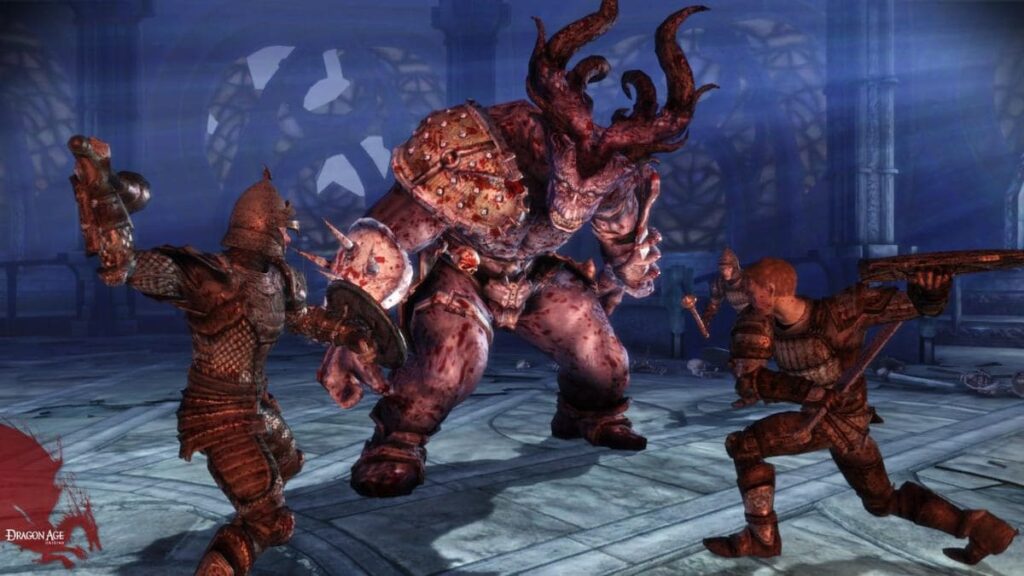
Before it became a sprawling action-RPG franchise, Dragon Age started as a love letter to classic computer role-playing games. Dragon Age: Origins was BioWare’s chance to build a brand-new fantasy world from the ground up, free from the Dungeons & Dragons ruleset they had used for classics like Baldur’s Gate.
The result was a dark, gritty, and incredibly deep RPG that reminded everyone why BioWare was the king of the genre.
What set Origins apart was its commitment to player choice, starting even before the game began. Your “Origin” story, choosing to be a human noble, a dwarven commoner, a city elf, or a mage, wasn’t just a tutorial; it was a prologue that fundamentally changed how the world reacted to you for the entire 60-hour journey. This level of role-playing depth is something fans still crave today.
The game was tough, tactical, and uncompromising. It threw you into a blighted world and forced you to make hard decisions with no clear right or wrong answers.
Did you sacrifice a beloved companion to save an army?
Did you let a demon possess a child to gain its power?
Dragon Age: Origins trusted its players to handle mature themes, and in return, it gave us one of the most rewarding narratives in fantasy gaming. It remains the high point of the series for many purists.
#9 NHL ’94 (1993)
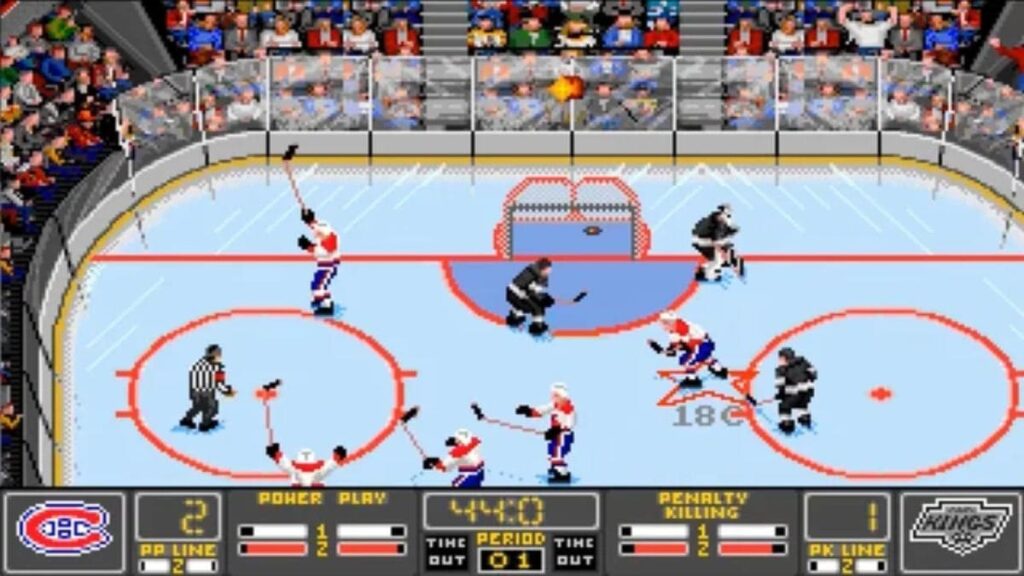
In an era where sports games were either simulations or arcade romps, NHL ’94 found the absolute perfect middle ground. For a generation of gamers, this wasn’t just a hockey game; it was the hockey game. Its influence is so profound that EA Sports still releases retro modes and “rewind” versions to capture the magic of this 16-bit classic.
The gameplay was deceptively simple: a fast-paced, five-on-five experience that was easy to pick up but boasted a surprising depth that kept players coming back for “one more period.”
It introduced now-ubiquitous features like the one-timer, allowing you to pass the puck across the slot and slam it home for a goal, a mechanic that felt revolutionary at the time. The chip-tunes were bangers, the fights were chaotic, and the gameplay was tighter than a hockey rink.
NHL ’94 represents a golden era for EA, a time when their annual sports releases were genuinely anticipated events that pushed the boundaries of their respective genres. It’s a testament to pure, timeless gameplay that still holds up today.
#8 Battlefield 3 (2011)
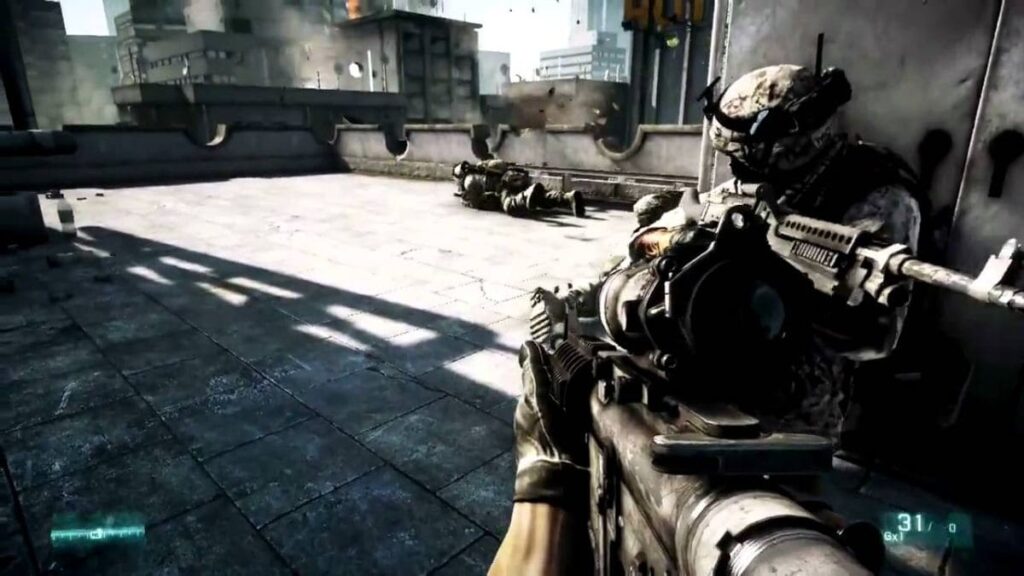
After a six-year hiatus for the numbered series on PC and a massive leap in console technology, Battlefield 3 arrived with the force of an orbital strike. This wasn’t just another military shooter; it was a technical showcase and a direct challenge to the reigning champion, Call of Duty.
It brought the franchise roaring back into the mainstream consciousness, and for many, it represents the pinnacle of the series’s large-scale warfare.
Remember the “Operation Metro” trailer? Or the “Thunder Run” mission, where you tear through a dust storm in an M1 Abrams tank? Battlefield 3 was all about those “only in Battlefield” moments. The Frostbite 2 engine delivered stunning visuals and destructible environments that made every match feel dynamic and unpredictable.
Snaking a jet between buildings, raining down artillery, or simply watching a building collapse on a squad of enemies, BF3 delivered a scale and immersion that its competitors couldn’t match.
#7 Burnout 3: Takedown (2004)
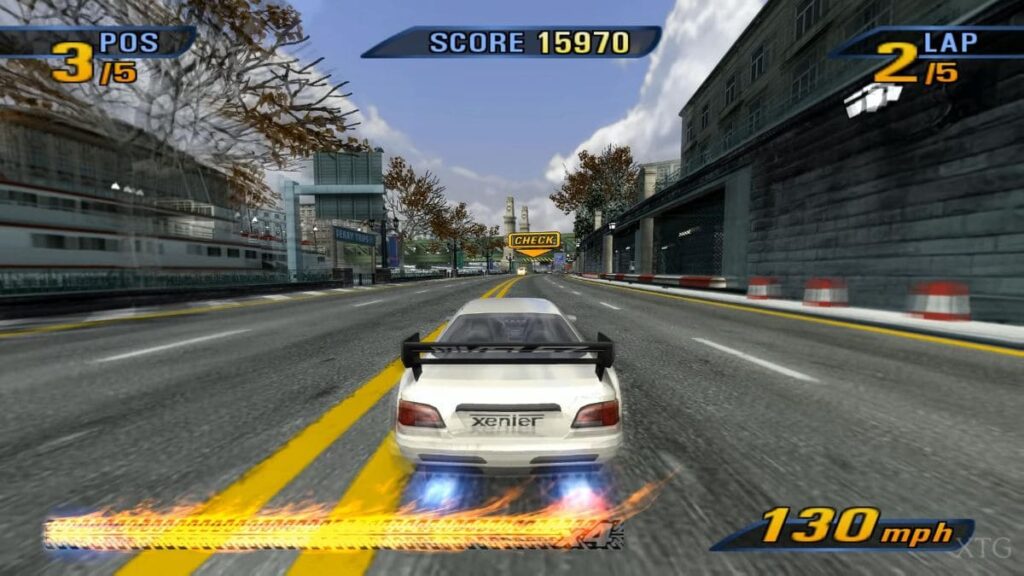
If you wanted a racing simulator in 2004, you played Gran Turismo. If you wanted to feel like you were starring in a high-budget, explosive Hollywood car chase, you played Burnout 3: Takedown.
This game wasn’t just about crossing the finish line first; it was about how spectacularly you could wreck your opponents along the way. It was pure, unadulterated arcade mayhem, and it was glorious.
The “Takedown” mechanic was the star of the show. It actively encouraged you to slam rivals into oncoming traffic, walls, or guardrails, rewarding you with a burst of speed and a slow-motion replay of the carnage you just caused. The risk-reward loop was addictive: do you play it safe, or do you go for that risky side-swipe that could send you both flying?
#6 NBA Street Vol. 2 (2003)
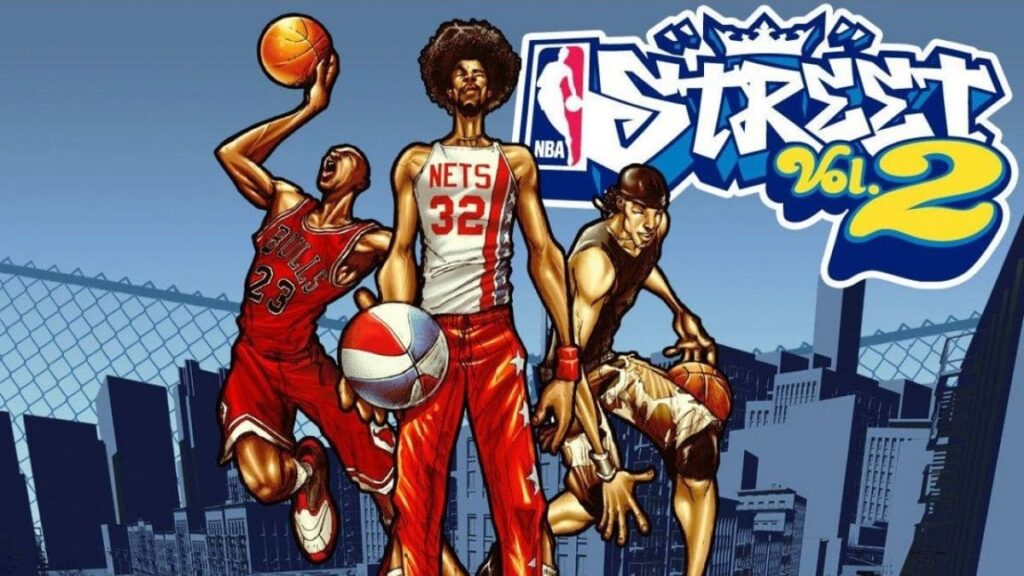
Before the NBA 2K series became the hyper-realistic simulator we know today, EA Sports BIG was busy pushing the boundaries of what sports games could be. Their mission was to capture the culture, style, and swagger of streetball, and they achieved perfection with NBA Street Vol. 2.
This game wasn’t just a sports title; it was a cultural phenomenon.
Forget five-on-five with shot clocks and zone defenses. NBA Street Vol. 2 was three-on-three on outdoor courts where style points mattered just as much as the score.
The “Gamebreaker” mechanic allowed you to fill a meter by performing flashy crossovers, alley-oops, and dunks, then cash it in for a three-point play that literally broke the rim (and the other team’s spirit). The controls were fluid and responsive, giving you the freedom to express yourself on the asphalt.
#5 Titanfall 2 (2016)
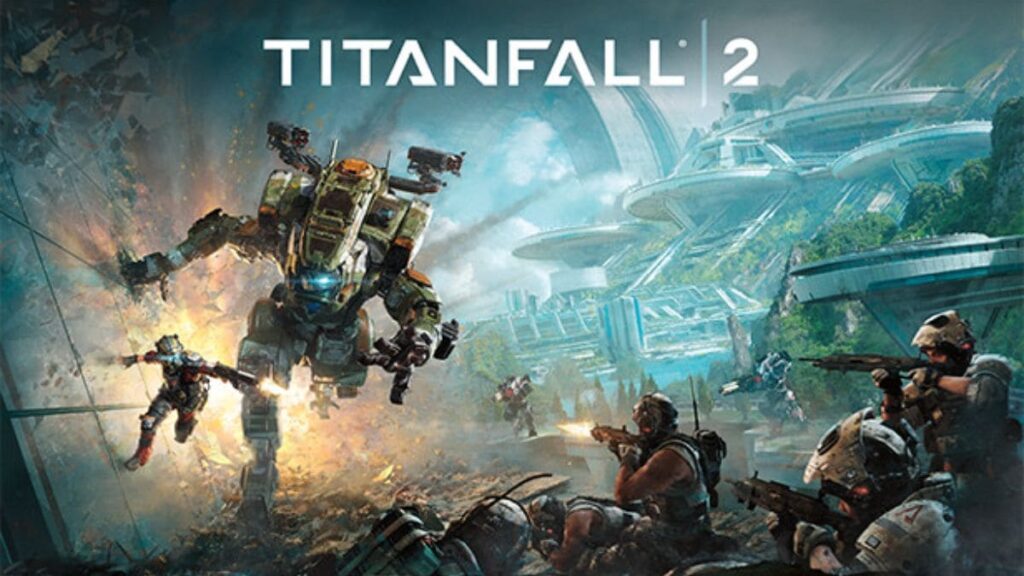
Titanfall 2 is the gaming equivalent of a tragic hero, universally praised, deeply beloved, and commercially underserved due to a release date that placed it between Battlefield 1 and Call of Duty: Infinite Warfare.
Sandwiched by the competition, this masterpiece from Respawn Entertainment was robbed of the sales it deserved, but its legacy as one of the greatest first-person shooters ever made is untouchable.
The first game was a slick, multiplayer-only tech demo. The sequel added a single-player campaign that stands shoulder-to-shoulder with the genre’s all-time greats. You play as Jack Cooper, a rifleman who bonds with a Titan, a massive combat mech named BT-7274.
The relationship that develops between the human pilot and his robotic partner is surprisingly heartfelt and provides the emotional core for a campaign packed with inventive ideas.
One level, “Effect and Cause,” lets you switch between the present and the past at will, solving puzzles and fighting enemies across two timelines simultaneously. It’s a piece of level design so brilliant that it’s been studied by developers ever since.
The multiplayer was equally phenomenal, building on the first game’s fluid parkour movement and adding a layer of progression and customization that kept players hooked for hundreds of hours. It’s a perfect FPS that deserved a much better fate.
#4 The Sims 3 (2009)
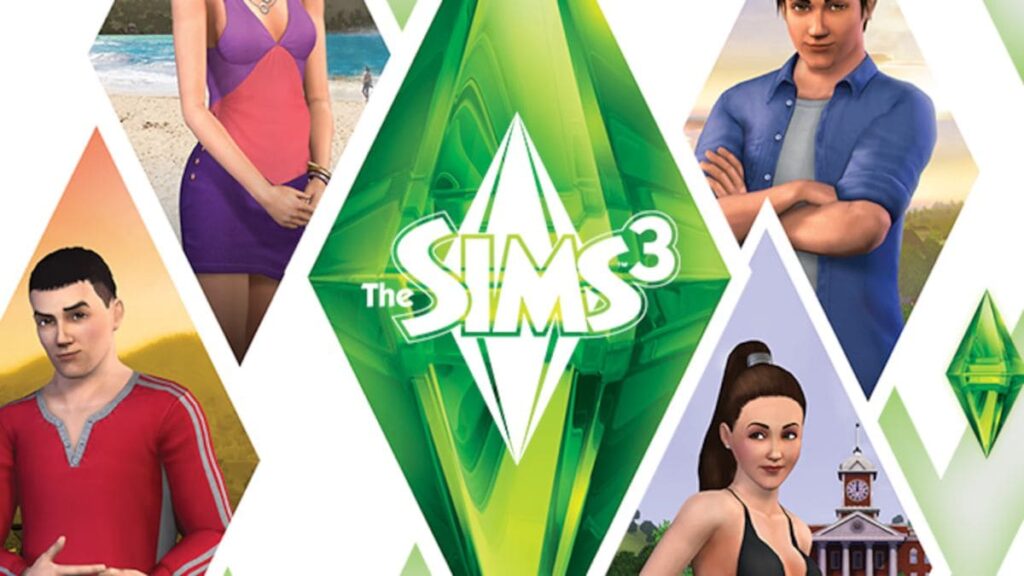
The Sims franchise is a beast of its own, a life simulation game that has captivated players for over two decades. While The Sims 2 built the foundation, The Sims 3 tore down the walls, literally.
By introducing a seamless, open neighborhood, it transformed the series from a house-bound dollhouse into a vibrant, living community. It was, and still is, the ultimate sandbox for digital voyeurs and storytellers.
Gone were the loading screens between your house and the rest of the world. Your Sim could now walk, bike, or drive to the local park, the library, or a neighbor’s house without a single interruption.
This open-world design made the town feel alive and allowed for stories that extended far beyond the front door. The customization options also exploded, with the “Create-a-Style” tool letting you apply any pattern or color to almost any object or piece of clothing.
Whether you were building a sprawling mansion, climbing the political ladder, or just trying to keep your Sim from wetting themselves, The Sims 3 offered an unparalleled sense of freedom. It took the cozy game genre and gave it the depth and scope of an epic RPG, solidifying its place as a high point for the series.
#3 Skate 2 (2009)
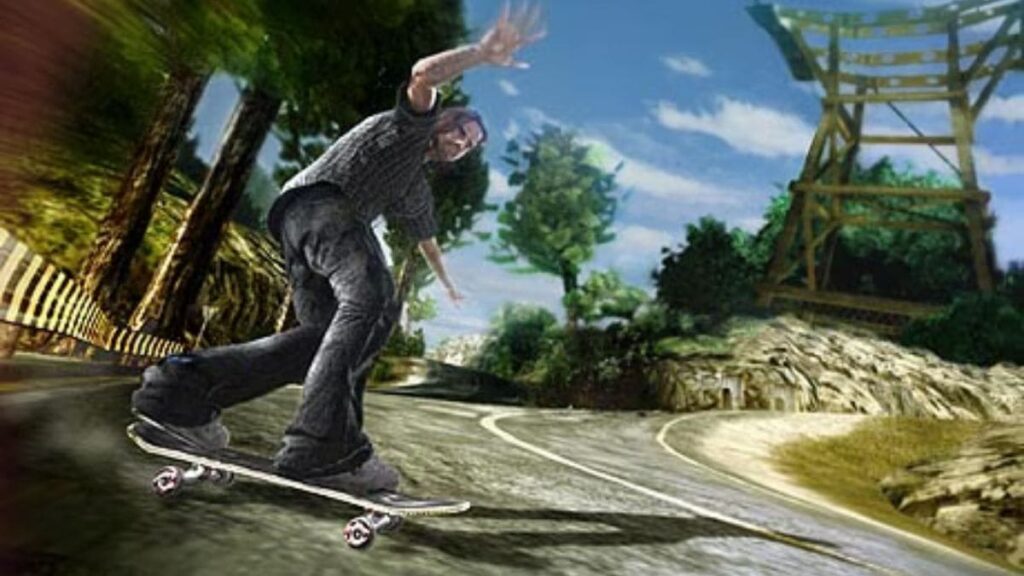
The Tony Hawk’s Pro Skater series defined skateboarding games for a generation with its arcadey, combo-heavy gameplay. Then, EA’s Black Box studio came along and changed everything with the “flick-it” system.
The first Skate was a brilliant proof of concept, but Skate 2 was the masterpiece that perfected the formula, creating the most authentic and satisfying skateboarding experience ever put to code.
Instead of pressing buttons to perform tricks, you used the right analog stick to flick, spin, and pop your board, mimicking the feel of actually doing the trick. It had a steep learning curve, but once it clicked, it was the most rewarding control scheme in sports gaming.
Skate 2 took the first game’s foundation and added the ability to get off your board, allowing you to move objects, hike up hills, and truly explore the world on foot.
#2 Dead Space (2008)
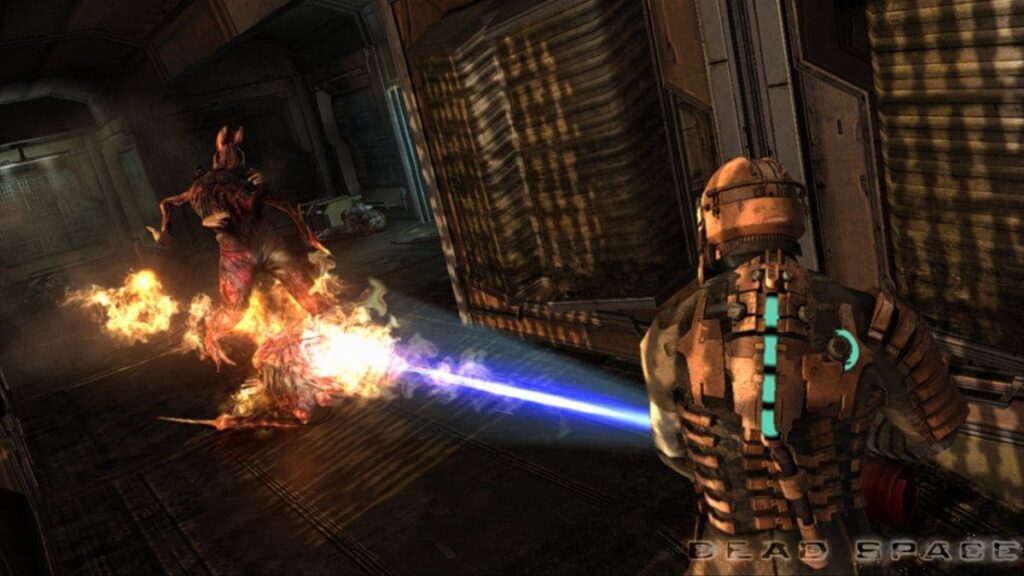
In the late 2000s, survival horror was leaning more toward action. Then Visceral Games took us to the USG Ishimura, a “planet cracker” starship overrun by horrific necromorphs, and reminded us what true terror felt like. Dead Space is a masterclass in atmospheric horror, a game that understands that what you don’t see is often scarier than what you do.
The genius of Dead Space is in its design.
The game’s UI is seamlessly integrated into the world: Isaac’s health is displayed on his spine, his ammo count is a holographic projection on his weapon, and there are no annoying menus to pause the action.
This keeps you perpetually immersed in the Ishimura’s claustrophobic, industrial hell. The monster design is iconic, and the strategic dismemberment, shooting off limbs rather than center mass, turns every encounter into a tense, tactical struggle for survival.
#1 The Mass Effect Trilogy (2007-2012)
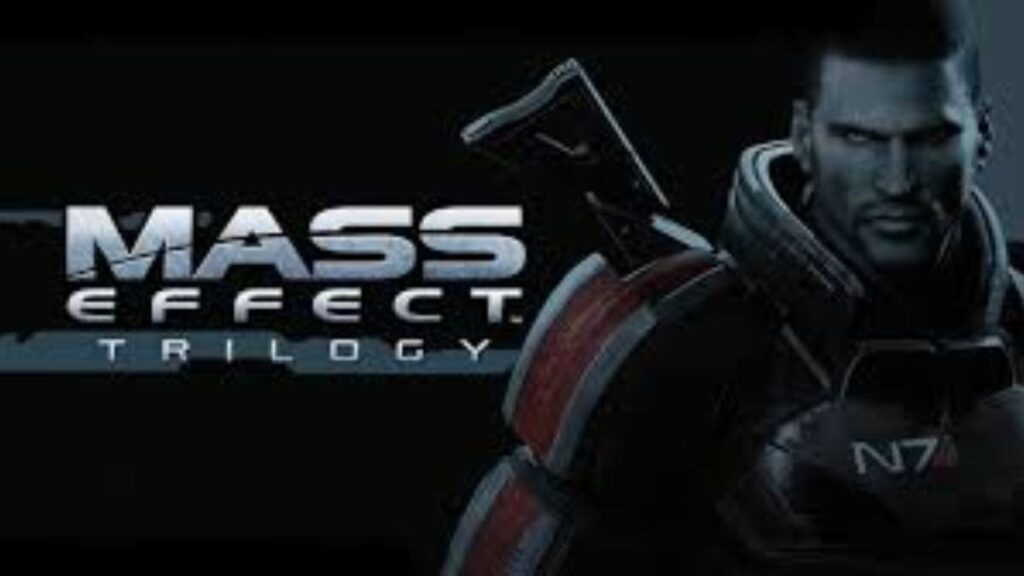
Okay, we’re cheating a little bit here. But when a single story spans three games and creates one of the most expansive, emotional, and impactful narratives in the history of the medium, you can’t just pick one.
The Mass Effect Trilogy isn’t just the best thing EA has ever published; it’s a landmark achievement for video games as a storytelling art form.
It begins with Mass Effect, a clunky but ambitious RPG that introduced us to Commander Shepard and a galaxy teeming with life, lore, and political intrigue. It then explodes with Mass Effect 2, widely considered one of the greatest games of all time.
This was a heist movie in space, where your sole mission was to recruit a crew of unforgettable characters, from the stoic Garrus to the genetically perfect Jack, and earn their loyalty for a suicide mission that could see them all die based on your choices.
Finally, Mass Effect 3 (ending debate aside) delivered a gut-wrenching, action-packed conclusion to the Reaper war. It brought the entire trilogy’s worth of choices to bear, creating a personalized finale where the fate of the galaxy rested in your hands.
This is a universe where your decisions carry over from one game to the next, where you fall in love with characters, and where the final charge on the Citadel feels earned because of the hundreds of hours you’ve invested.
The Mass Effect Trilogy is proof that video games can deliver a sci-fi epic that rivals, and even surpasses, the greatest films and literature in the genre. It is, without a doubt, the best of the best.